


Creative Placemaking + Relational Revitalization
How people sustain places
Interviewed by JJ Walsh (Inbound Ambassador - Seek Sustainable Japan)
Creative Island Revitalization and Socially Embedded Tourism Micro-Entrepreneurship - Keynote for SEAMA conference

Research Publication on Creative Place-making, Neo-endogenous Revitalisation, Socially Embbeded Entrepreneurship
Chen, L., Hu, Y., Sun, A., Chen, Y., & Qu, M. (2026). Mobility and fixity: factors of rural hometown attachment among migrant youths in the pearl river delta region of China, Children's Geographies, https://doi.org/10.1080/14733285.2026.2632611
Zollet, S., & Qu, M., (2025). The reinvention of local food culture by creative newcomers: rural revitalization, sustainability, and place-making. In Tanaka, K. (Eds.), Japan Sustainability. Lexington Books
Zollet, S., & Qu, M. (2024). Creative newcomers and local food culture: revitalization, sustainability, and place-making between rural and urban. Food, Culture & Society, 1–19. https://doi.org/10.1080/15528014.2024.2443331
Zollet, S., & Qu, M., (2024). The reinvention of local food culture by creative newcomers: rural revitalization, sustainability, and place-making. In Tanaka, K. (Eds.), Japan Sustainability. Lexington Books
Qu, M., He, Y., McCormick, A. D., & Funck, C. (2024). Diagnosing uneven revitalisation outcomes among aging communities in Japan's Island art festival. In E. Papoutsaki & S. S. Niaah (Eds.), Island art and music festivals. University of the West Indies Press, 3-26.
Ginoza, A., Qu, M., & Papoutsaki, E. (2022). Editors’ Note: Island Cultures and Heritage: Open and Continuous Reflections (OJIS Special Issue in Collaboration with SICRI). Okinawan Journal of Island Studies, 3(1), i-v.
Qu, M., & Funck, C. (2021). Rural art festival revitalizing a Japanese declining tourism island. Nancy Duxbery Eds, In Cultural Sustainability, Tourism and Development (Re)articulations in Tourism Contexts, (pp. 51-68). Routledge. DOI: 10.4324/9780367201777-6
Zollet, S., Qu, M. (2019). The Role of Domestic In-migrants for the Revitalization of Marginal Island Communities in the Seto Inland Sea of Japan. MIRRA (Migration in Remote and Rural Areas) Research and Policy Briefs Series.
Zollet, S., Qu, M. (2018). Organic Farming and Agricultural Landscape Preservation for the Sustainable Development of Uttarakhand Mountain Villages, Journal of Urban and Regional Studies on Contemporary India 4(2): p. 41-53
Island Action Research Trilogy - I Past - Reframing Island Heritage
Exhibition and Newcomer Attraction in Mitarai, Osakishimojima (2016-2019)


Research and Community Engagement in Mitarai, Osakishimojima, Japan
This action research project examines depopulation, population ageing, cultural continuity, and sustainable community development in Mitarai, a historic settlement on Osakishimojima Island in Japan’s Seto Inland Sea. Using questionnaires, interviews, participant observation, and action research, it compares the perspectives of long-term residents, newcomers, commuting entrepreneurs, and visitors. It also explores how art, tourism, and small-scale entrepreneurship contribute to rural revitalization.
From 2018 to 2019, the research team collaborated with local artists to organize the exhibition Nature, History, Culture & Art at the Hiroshima University Museum. The exhibition brought together fieldwork findings, residents’ voices, photography, and painting. The research showed that community development depends not only on attracting permanent residents, but also on relational actors who connect the island with cities, mobilize knowledge and resources, and participate in local cultural life. The following research has continued since the exhibition and remains ongoing today.
Subsequent research focused on Shiosai, a small-scale community art festival in Mitarai. Through the reuse of vacant buildings, preservation of collective memory, and collaboration between residents and artists, the festival has attracted visitors and newcomers while strengthening local social networks. The findings also demonstrate that small art festivals are not universal solutions. Their long-term impact depends on sustained community participation, local ownership, differentiated Initial Resources, and respect for the history and culture of each place.
More info:
An aging Japanese island’s lessons on the future of sustainable travel
by Hiroshima University Department of Public Relations
Related Research Articles:
Qu, M., Cheer, J. M. (2021). Community art festivals and sustainable rural revitalisation. Journal of Sustainable Tourism (special issue of event and sustainability), 29(11-12), 1756-1775. DOI: 10.1080/09669582.2020.1856858


Co-creating Research and Art Exhibitions with Islaners
Research Film - Island Revitalization
These 12 mini documentary films are the outcome of a year-long (2021-2022) collaboration between two socially engaged projects in the islands of the Tobishima Sea route region (Tobishima Kaido) in Western Japan. The two project, led by Dr. Meng Qu and Dr. Simona Zollet, focused on creating an island revitalization documentary and a video promoting the area to potential in-migrants.
The filming projects geographically include 5 peripheral islands between Hiroshima and Ehime prefectures in the Seto Inland Sea of Western Japan. In addition to introducing the new creative activities such as art, film and music festivals, the projects also focus on community crafts and activities, such as fresh flower arrangement, Shamisen folk music, citrus farming and other aspects of islanders’ life, culture, and traditions. Throughout this project, we hope to encourage interest in the area and attract more potential in-migrants into this depopulating region.
Produced by Meng Qu, Simona Zollet
Driected by Meng Qu, Pornphan Wajjwalku, Miriam Ilsa Arfani, Simona Zollet
Music by Hiro Nishibara
Drone by Ryan Yosua Tutuarima
Narration by Meng Qu, Pornphan Wajjwalku, Miriam Ilsa Arfani
Interview & camera by Hiro Nishibara, Pornphan Wajjwalku, Ryan Yosua Tutuarima, Miriam Ilsa Arfani, Theodore Leonardo Aipassa, Meng Qu, Simona Zollet
More info: https://www.sicri.net/islandrevitalization

Promotion Videos - EXPERIENCE – Tobishima Island Life
Shima (island) Life - Tobishima Kaido in-migration experience tour research documentary

Special Thanks
Sachio Tanaka, Kaolli Tanaka, Kazushi Tanaka, Tsunemi Kagitani, Akihiko Narita, Oride Chise, Keisuke Kuwata (Johnny), Shige-chan, Shunji Takashima, Tai Saitou, Maho Miyahara, Fukunori Nitta, Takao Saito, Takuya Imasato, Tom Miyagawa Coulton, Yoko Iwamoto, Tomie Eguchi, Kazumi Kawate, Mikael Nomura Kai, Rio Maeda, Tsubasa Hamano, Utama I Made Fon Dwi Putra, Erdenesolongo, Krit Komolsirikul, Haruka Tanaka, Yoshida Atsushi
Mitarai Community, Small Island Cultures Research Initiative (SICRI), Mitarai Base & Mitarai International Music Festival, Mitarai Art Gallery, Dept. of Integrated Global Studies (IGS), Hiroshima University, Office of Academic Research and Industry-Academia-Government and Community Collaboration, Hiroshima University, Island Pictures LLC, Shiosai Executive Committee (Mitarai Shiosai Art Festival), Tobishima-Kaido Regional Revitalization Cooperation Corps, Tobishima Life, and Sekizen Islands OKAMURAJIMA Film Festival.
Related Research Articles:
Zollet, S., & Qu, M., (2025). The reinvention of local food culture by creative newcomers: rural revitalization, sustainability, and place-making. In Tanaka, K. (Eds.), Japan Sustainability. Lexington Books
Zollet, S., & Qu, M. (2024). Creative newcomers and local food culture: revitalization, sustainability, and place-making between rural and urban. Food, Culture & Society, 1–19. https://doi.org/10.1080/15528014.2024.2443331
Zollet, S., & Qu, M., (2024). The reinvention of local food culture by creative newcomers: rural revitalization, sustainability, and place-making. In Tanaka, K. (Eds.), Japan Sustainability. Lexington Books
Zollet, S., Qu, M. (2019). The Role of Domestic In-migrants for the Revitalization of Marginal Island Communities in the Seto Inland Sea of Japan. MIRRA (Migration in Remote and Rural Areas) Research and Policy Briefs Series.
Island Action Research Trilogy - II Present - Understanding Newcomers
Research on the Lives and Experiences of Current Island Residents
33 islands in the Seto Inland Sea (2018-2022)
Island Action Research Trilogy - III Future - Co-creating Island Education
International Secondary Education in Osakikamijima (2022)
Island Art and Sustainability Education Summer School in Japan


Island Art, Sustainability, and Education in Osakikamijima
This research examines how arts education can address depopulation, population ageing, and sustainable development on Osakikamijima, an island in Japan’s Seto Inland Sea. The island is pursuing an “Education Island” strategy that uses innovative education to connect the local community with the wider world.
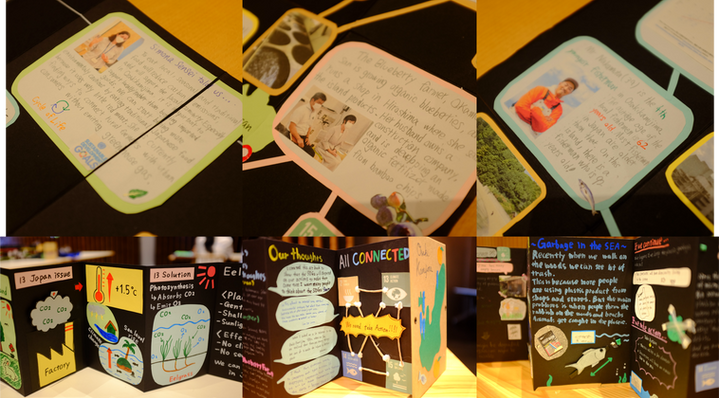
Working with Hiroshima Global Academy, two universities, and island residents, the project used participatory action research centred on the Sustainable Development Goals. Students explored the island through community interviews, fieldwork, deep mapping, artist’s books, and soundscapes. Their work documented the island’s environment, culture, and social challenges while expressing their ideas for its future through a public exhibition.
The findings show that art can make complex sustainability issues more tangible and accessible. Field-based learning also strengthens relationships among students, schools, and residents. An “Education Island” is therefore more than an island with schools. It requires education to be embedded in community life through experiential learning, international exchange, and local collaboration.
Related Research Articles:
